Bottled water! Emblem of assholery. None more so than the Fiji Water brand, with its deceptively idiotic campaign to seem ecologically sound and socially responsible. This despite the fact that they exist to sell aquifer water, mined from a dirt-poor South Pacific nation, in super-thick plastic bottles, and under the supervision of a military dictatorship, to the effete snobs of the western celebrity elite and their lickspittle public. There was a great article in Mother Jones recently that tears the enterprise to pieces. In response, Fiji posted a rebuttal on their site that lamely managed to sound wounded and hard done by, only to have Mother Jones editor Clara Jeffrey respond and continue to widen the rift that had been made in their cleft. The comment thread that unspools below that provides further amusement, if only for the eerie automated quality of the respondents "Fiji Media Gal" and "Fiji Green Gal". This uncanny feeling- of being soothed by gentle zombie capitalist hippy P.R. robots- is what the Dead Kennedys were trying to evoke in "California Uber Alles". Zen fascists, 100% natural, indeed.
The world is over.
A goat with its throat slashed may buck against its bonds, but the blood will drain out and it will die. A gentle hand might give it a pill to ease the suffering. Like the goat, we've swallowed the pill, and so it comes to this. Buy an efficient lightbulb. Drive a "hybrid" car. We have eaten the host that was laid on our tongue, the host embossed "HOPE". We've supped from the poisoned chalice to wash it down.
Our sad flapping jaws will keep on hurking out positive affirmations like trained seals clapping for the ringmaster. Our prating of determination and principled struggle and positivity of all sorts sounds now as do the grunts of a dental patient turned loose to the street with a toothless gape and gums full of anaesthetic. For it's Hope that has killed us these many long years, and it will continue to kill us, though it will seem like famine, and it will seem like war. It's hope that strangles the life of the earth, hope that fills the land and water with poison, the hope that something might be better for our children, and the hope that our pestilential children might somehow impossibly behave other than humans have ever done. Hope places around our necks the thin, piano-wire garrotte of sustainability, and chuckles in syncopation with our breathless gasps. Hope throttles us with our efforts to bring "justice" and "peace", to fight "oppression", for we stand in the shadow of one hundred thousand years of world-rending growth and ecological annihilation and proclaim that without darkness, we would never have been able to understand the properties of light.
Climate Ground Zero is a campaign against mountaintop removal, they currently have a treesit campaign that is being threatened right now by authorities, some participants have been detained. Check out Climate Ground Zero for updates and read below how to support the campaign.
It’s going to take action, continued and direct, to end mountaintop removal in Appalachia. We need to stop the coal companies from laying mountains low, poisoning air and water and ruining livelihoods. Our volunteers have put their bodies on the line to stop the over 3,000,000 pounds of explosives used every day to level West Virginia for coal.Climate Ground Zero is not another environmental organization. It is an ongoing campaign of non-violent civil disobedience in southern West Virginia to address mountaintop removal coal mining and its effects on our future.
Here in West Virginia, an overwhelming majority of residents are opposed to this destructive form of mining. But our political leaders are afraid of Big Coal and their powerful lobbyists--a few coal state Senators and Representatives of Congress have vowed to block any reforms. Over a century of repression has created a situation where coal operators are exempt from environmental laws and regulations, and a corrupt court system refuses to enforce those laws.
To stop mountaintop removal, we need to awaken the consciousness of the country to this violent crime. Since the beginning of the year, hundreds of activists have come to the coalfields and stood with the residents of West Virginia to demand an end to the destruction. So far, over 90 people have been arrested in a series of actions that have actually stopped the blasting, garnered national media attention and elicited harsh reactions from the coal industry.
Tired of writing e-mails and attending meetings? Put on your boots, hit the road and come stand in solidarity with the people of Appalachia. We are going to keep confronting King Coal until we win, but we can't do it without you here.
Climate Ground Zero operates a base camp in the heart of the coal mining region of West Virginia.
John Fekner just sent me a link to a great photo collection he recently put up of his stenciled car husks. John started painting slogans such as "Decay" on the side of abandoned cars in Queens and the South Bronx in the early 80s. This simple act de-naturalized the collapse of these neighborhoods, reminding everyone that this was not some foregone conclusion, but the results of specific policies and actions of city officials. Check out all the images HERE.
Here's a slightly out-of-date flier I designed for Portland-area environmental group BARK and their campaign against the proposed Palomar pipeline, part of a massive network of interconnected energy development schemes slated to overrun the estuaries, forests, and farmlands of the Portland/Astoria/Mt.Hood/Columbia River region. It's all part of a plan to bring Liquefied Natural Gas to California via Oregon. Why via Oregon? Well, the politically savvy and comparatively wealthy Californians for whom the gas is intended have resolutely opposed and defeated all the proposed gas terminals on the California coast. Washington's done the same; the only one on the west coast so far is in Baja California. Less money, less power? That's why they're coming to Oregon! Two large LNG terminals are planned for the Oregon coast, one in the mouth of the Columbia near Astoria, and one in Coos Bay. Both will have massive impacts on local areas, requiring astronomical security provisions and ensuring some large measure of environmental destruction. Part of that destruction will be the pipelines that are slated to be laid through the forests of the region; the lush firs, spruce, hemlock and pine that make up the land's green mantle. Hundred foot wide permanent clearcuts? No problem? Tunneling under upwards of forty creeks and rivers? Okay! Destroyed farmlands, annihilated wildlife, industrial accidents? Yessssss! This is a wonderful example of capitalist strategy: there is, as yet, no large corporation involved in the planning of this. It's being executed by a gaggle of suits in a boardroom somewhere, drawing lines on a map and estimating cost-benefit ratios, growth projections, and flow potential. It is the rarefied atmosphere of infrastructural planning, cynically imposed on the land by economic analysts. Liquefied Natural Gas is popular all over (although not everyone is super enthused) and promises to bring us a warm, green, sustainable future where nothing ever goes wrong.
I recently went to see Propagandhi play in Milwaukee. At this show I first heard about the Tar Sands, a dirtier more toxic way of producing oil than usual. Some basic information about the Tar Sands, links to more info, and a sticker design I made about the Tar Sands are below.

In the Canadian Boreal forest just downstream of the eastern foothills of the Rocky Mountains are the Canadian tar sands. The region contains some 2 trillion barrels of oil, but getting to it will mean destroying an area larger than the state of Florida.
Tar sands consist of heavy crude oil mixed with sand, clay and bitumen. Extraction entails burning natural gas to generate enough heat and steam to melt the oil out of the sand. As many as five barrels of water are needed to produce a single barrel of oil.
Tar sands oil is the worst type of oil for the climate, producing three times the greenhouse gas emissions of conventionally produced oil because of the energy required to extract and process tar sands oil.
The tar sands creates a toxic landscape for first nations people and local people, threatening Indigenous rights, public health, and water quality.
There will be many new pipelines running through the us/especially midwest.
http://ran.org/campaigns/freedom_from_oil/spotlight/tar_sands/
http://oilsandstruth.org/
http://www.ienearth.org/
Protests against the G8 meeting are underway in Italy and the IMC is covering the events as they unfold.
http://g8.italy.indymedia.org/

On the opening day of the G8 summit, Greenpeace activists occupied 4 coal fired-power stations across Italy, to demand stronger leadership on the climate. (As of today, it is being reported that the G8 failed to agree Wednesday on specific cuts in heat-trapping gases by 2050, undercutting an effort to build a global consensus to fight climate change.)
Here is a video of some of the actions:
Additionally, Greenpeace dropped a banner at Mount Rushmore-a tactic that has been done many times before, both by Greenpeace and more specifically by the American Indian Movement. The banner was taken down after a few minutes and ten people were arrested.
It is hard to argue against choosing symbolic locations for actions and Mount Rushmore obviously fits this bill, but my concern is: what if the media does not cover it? Although this story is just breaking, I have not seen a lot of mass media coverage, as of yet. Greenpeace has created their own media campaign about it but many of the major news outlets have yet to pick it up. This might change, but if it doesn’t, does that throw a monkey wrench into the tactic of banner drops? This blog is at its best when we debate these issues and tactics, so please post away.
Are banner drops becoming an outdated tactic?
Do they get the media's attention?
If they don’t, what does?
What does this all say about our reliance on mass media coverage for movements to be successful?
My partner Peter and I just made a couple tinctures from herbs we grew in our garden! ((Disclaimer: Before you make your own tincture, you should do a lot of research on the herbs you want to use, which parts of the plant to use, and also make sure there are not toxic, dangerous, etc. Some herbs are toxic or potentially dangerous, so make sure you consult with herbalists, friends, and books! The following tinctures we made are mild and have no known dangerous effects.))

Calendula:
Lavender:

Peppermint:

All we've had is rain up here, but the garden seems happy enough...
Check out the garlic and the flowers!


Pictured here are perennials Rue, Feverfew and Sorrel, and also annual Chamomile and Cilantro. Chamomile makes a soothing tea if you dry the flowers and then add hot water. Feverfew repels aphids! Cilantro is a great and tasty ingredient for salsa, and as a garnish on curries.

Keep reading for lots more photos!
All the talk of waterboarding, stress positions, walling, psychological assault etcetera, has put me in the mood for a little perspective. Bush endorsed "enhanced" techniques, Obama hasn't put a stop to them, oh! The wringing of hands. Folks, torture is normal. Waterboarding is for the weak. Let's have a look at some REAL torture, of the sort that culture demands. This is some of the worst shit ever.
Click here to have an unpleasant experience.
Check out the latest video about the Tamms Year Ten mud stencil action in Chicago that took place on June 6th.
More info:
www.yearten.org/
mudstencils.com/
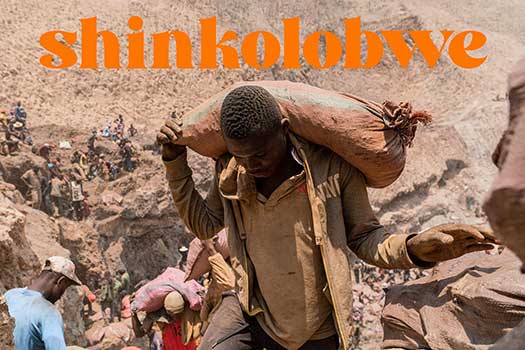
My colleague Ryan Burns has been hard at work on an ambitious project of late. It's to be a massive reliquary of the Congo mineral wars; a huge slab of excavated central African soil, displayed as if it were an archaeological find shipped to a research center in a massive crate. The dig reveals layer upon layer of exploitation and devastation, destroyed forests, rent cultures, annihilated wildlife, and gruesome paramilitary struggle for control of the stream of minerals.... These minerals, hacked by hand from beneath the Congolese subsoil by teams of preteen miners, make their way through unscrupulous chains of corporate commerce into all our modern high-tech devices, our computers, our cellphones, blackberries, i-phones, x-boxes, playstations, anti-lock brakes, and so on, and so on.
We are all complicit in this, and the fact that I'm blogging about it is the ultimate irony. None of this dissemination of information is possible without the grim calculus of total destruction that has been wrought on the lands, life and people of the Democratic Republic of Congo during the past twenty years. Blood is on our hands.
Profane Relics will be on display at the Sea Change gallery in downtown Portland, Oregon, starting in July. More details coming soon.
Check out these garden photos -- 1 month later from "Ridin Dirty" blog...
![]()

We left the house today to go for a walk and close by our apple tree were a few beautiful morels!
So psyched for our free food foraging! We are going to eat them with pesto we made from arugula we grew last year and froze. It has lasted all winter. It is amazing how much food we grew and were able to store and eat all winter!
Disclaimer: never ever eat any mushrooms you find without properly identifying them first!!! You need more information than this picture since there are look alikes that are poison!
Talk to a local mycologist before eating.
As the garlic scapes sprout forth wipe your forehead with the euphoric richness of the earthy dream, and the earliness of the day innoculates your seeds with the promise of life away from empire, summon forth your new seedlings of resistance, wipe the sleepies from your weepies and compost this ground, The Nation Of Gardeners, to the space of taste in your yard, kitchen window box, porch, or rooftop. It will guide you to embrace your repressed instincts which will harmonize you with the circular world, and we will be in the front lines of peace and radical social change when we banish the bureaucrats and sing, "Plant, which is the greatest dream, as it gives you life, as it restores your wisdom." Plant is a drug, a life like state, which creatures burrow themselves into like a tunnel, and it is to us an exquisite condition which must be attained.
Got caught on camera ridin' dirty over the weekend... check out these dirty pictures!!! (read below for much more)

That's all, folks! The last Jaguar in the United States has been killed.
The beast in question, a sixteen year old male named "Macho B", was euthanized by state biologists after being caught and collared in a trap that was supposedly set to catch bears and mountain lions. There's an excellent article in the Zonie report that seems to sum it up. In fact, it sounds a lot like something I might have written. As usual, what we've got here is a story rife with inexplicably revolting and duplicitous human behaviour. Something I find fascinating about this particular case is the obvious role that the concept of science, and of scientific conservation, is playing in the destruction of the natural world. . All the monitoring, tagging, data collection, analysis, prognoses, spreadsheets, cost-benefit ratios and et motherfucking cetera add up to precisely one thing: Jaguars are extinct in the continental United States. Human scientific examination of the natural world functions in much the same way as a ray of sunlight focused through a high-powered maginfying glass: Subjects are illuminated in light so strong it immolates them, and the ash from their pyres fills the pages of sagacious texts. It brings to mind a proclamation by the Judge in Cormac McCarthy's awesome novel Blood Meridian, which, in paraphrase, goes something like: " Once mankind knows the names and properties of all the creatures and plants and processes of the Earth, he will control them utterly and they will writhe before him, impaled on the pin of his knowledge, unable to escape." Add in the million-dollar-a-mile border fence and you have a guarantee that whatever jaguars remain in Sonora will not be repopulating their northern range anytime soon. That's a terrible pity, because if there's one thing North America needs, it's some PREDATORS that aren't PRIMATES.

It's been a while since I've posted any depressing stories about doomed animal life on this blog. Now that I've actually gone through with the whole moving-to-portland, thing, maybe I'll get back on the ball with it. The last posting in this category was related to the crashing hammerhead shark populations in the Gulf of California, and I said at the time that the next entry would have to do with the terrible story of the Totoaba, a member of the croaker or drum family, that once spawned in incredible profusion at the northernmost tip of the Gulf, and in addition reached sizes of up to six and a half feet and 330 pounds. Alas, this is no longer the case. Read on for a truly spectacular tale of human destructiveness and asininity.
I got this from Brian Ponto today:
On this first day of spring we are proud to launch LANDFILL--an annual publication made in collaboration with our friend, the environmental printer, Greg Barber Co. Each issue explores a conceptual approach to its printed components. Second Chance's theme, 100% post-consumer papers and non-toxic toners, was made in partnership with Mohawk Fine Papers and the vendor Digital Connection.After the interviews, our stories of second chances were printed using non-toxic toner onto paper containing flower seeds and buried throughout New York City. Brooklyn Photographer Luke Barber-Smith photographed these burials. As the sprouts reach the topsoil, the first lives push through the earth and grow into real wild flowers for the spring.
Printed copies begin to mail next week from both Mohawk Fine Papers and Brian Ponto. Thanks for your time reading, and here's to new beginnings in a hopeful new year.

Look at these beautiful seed packs!!! The second one down on the right hand side is one that my friend Michael Truckpile drew for friends Ken and Doug. They have been busy for a long time working on their seed company/ library. If you are planning a garden for this year, check out their selection of seeds. They sell them in regular paper envelopes too. Many of the seeds are local and all are organic and heriloom. They are having TWO openings for the art packs and the info is below! I unfortunately won't be able to be there but I will be growing their seeds in my garden this year and I wanted to send along the info about The Hudson Valley Seed Library, the art show, and the fact that Ken and Doug have hundreds of envelopes full of seeds that are just dying to sprout in your garden this spring!

seedlibrary.org
Pack Art
Heirloom Garden Images Past and Present
Two Gallery Shows
Gardiner Library: March 2nd- 30th
Opening Reception and Talk: March 8th, 2-4pm
Catskill Mountain Foundation: April 11th- May 17th
Opening Reception and Talk: April 11th, 4-6pm

This is a design I made recently for a t-shirt for the Earth First roadshow. It got me thinking about how nice it would be if the beavers did take some kind of action against the destruction of their worlds, because they'd probably do a better job of it than humans ever could. Human ideas are a toxic and destructive force in and of themselves, but seldom more so than in the service of righteousness.
Ladies and Gentlemen, the jury has returned from their deliberations and they have delivered the following verdict: we are fucked. Yes, fucked. The Earth is strapped down to a filthy bed in a back alley of some benighted slum and is having the guts ripped out of it by the forsaken human race. Let's examine a brief digest of current news that illustrates this problem, namely the problem of OUR BEING FUCKED. 
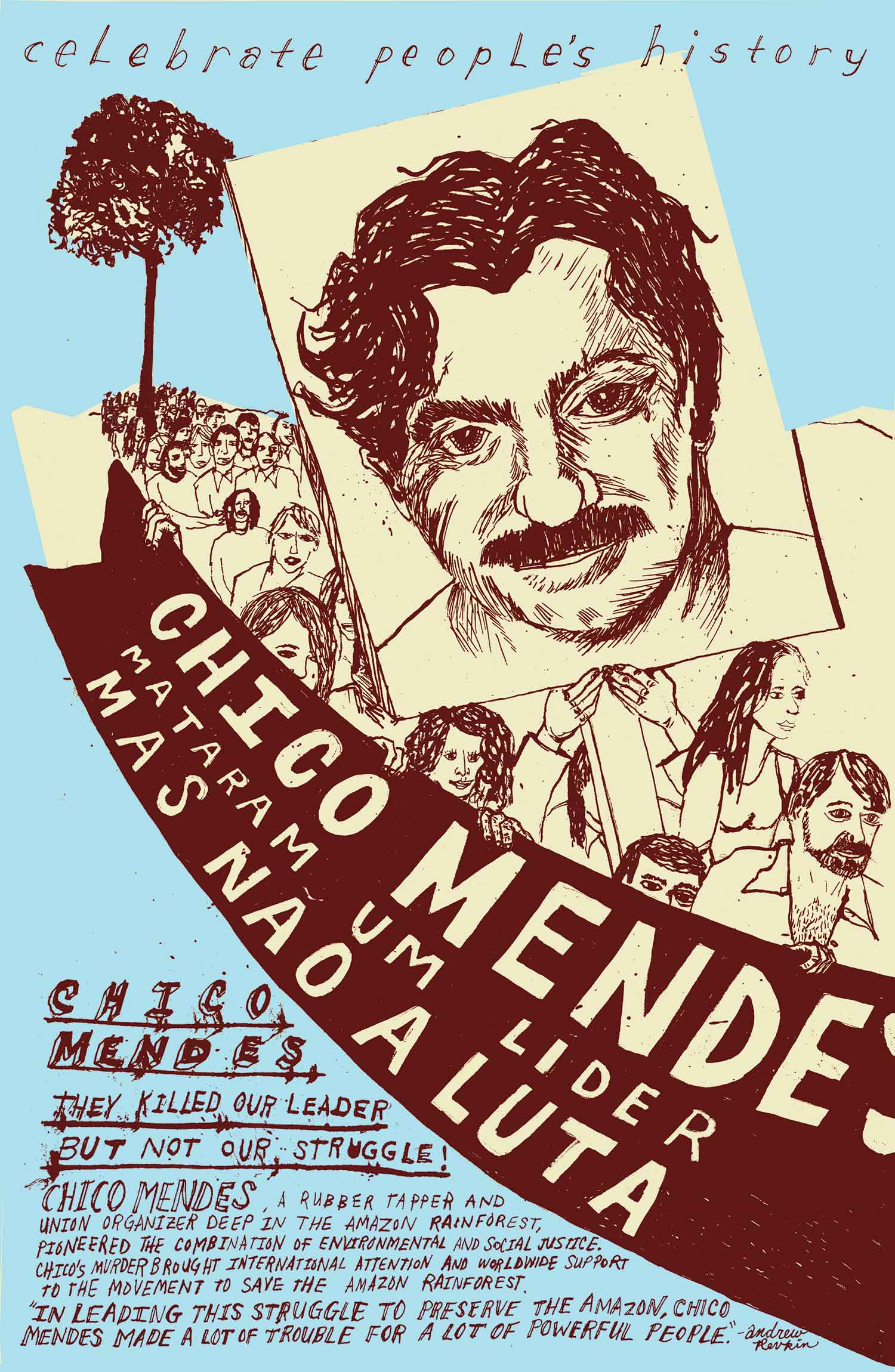
It was recently the 20th anniversary of the death of Chico Mendes, the Brazilian rubbertapper who was murdered by a cattle rancher and his son for the crime of opposing rainforest clearance in Brazil's Acre region. Mendes' legacy is a network of what are known as "extractive reserves", where people can make a living from the rainforest without chopping it down. That living takes the form of tapping trees for rubber, collecting medicinal plants, and the like. Unfortunately, since the world rubber price has crashed, the tenants of the extractive reserves are now chopping down the forest to grow corn and soybeans and FUCKING SUGARCANE FOR YOUR GODDAMN BIOFUEL CARS. Economics trumps principles, as per usual. Of course it does. If you've got starving children to feed and there's a pristine rainforest right outside your backdoor, guess who loses?
Evo Morales, much vaunted defender of indigenous rights and Bolivian energy independence, opponent of neoliberal development schemes and water privatization, has agreed to permit oil exploration in 400,000 hectares of pristine rainforest in Bolivia's northeast. That oil is going to be used to earn hard currency to raise the standard of living for the vast number of impoverished Bolivians, the majority of whom are indigenous. If you've got starving citizens and a pristine rainforest in your northeast, guess who loses?
The amount of time and energy put into the development of new methods of destroying all life never fails to impress. The contemporary trend of biomimicry in industrial design produces a lot of unintentionally hilarious/nauseating machines that emulate the structures and methods found in the natural world, while at the same time having only one function, namely the annihilation of the aforementioned world. Check this shit out: the TIMBERJACK!
There's a certain insight available into the tangled economic logic underpinning industrial world-destruction available through images and video of these machines. Notice that the precision of the Timberjack's stepping mechanism is so lovingly described...if it were to sense a rare orchid below its ten-ton tread, lo! It would pull the offending limb away and whisper a prayer of thanks to Gaia for her wisdom. And then the process of ripping the forest down and shredding it would continue. I imagine a little cartoon bluebird perched on the Timberjack, trilling a happy song!
I've just returned from several weeks travel in Mexico, mostly spent at the southern end of the Baja California peninsula. It's an area with a spectacularly rich marine ecology and magnificent terrestrial flora and fauna, as well as a showcase for depressing statistics on species annihilation and corporate tourism. I'm going to post several blog entries about aspects of my trip, and the natural and social history of the Gulf of California region. Note: the Gulf of California and the Sea of Cortez are the same thing.
The main focus of the trip was five days of diving around Espiritu Santo island, just north of La Paz, and I also spent a few days camping on a beach north of Cabo Pulmo. It was a vacation, sure, and an escape from winter, and most importantly it was an astonishing immersion in the natural world, no pun intended. Scuba diving is a genuinely sublime pursuit, akin to travel to a different planet, one where you can fly and are surrounded by a tumult of wondrous agile and beautiful life forms. Some of those are skittish, and others are quite curious as to what you are and what you might be doing. Some seem to have no consciousness of you at all. It's a very different kind of experience than most excursions into "nature", much more interactive, and the diversity of life encountered during a one-hour dive is often staggering.
One of the more spectacular dives was at the El Bajo seamount, an underwater mountain that reaches to within sixty feet of the surface about 7 miles off the northeast end of Espiritu Santo. A plankton bloom had developed in the areas we'd been diving, leading to low visibility at the majority of the dive sites we'd already been to. At El Bajo, however, we descended through the green cloud of microscopic organisms and algae into a clear bell-jar of deep water, down through schools of rainbow runners to the mountaintop. Having pulled ourselves down on the anchor chain, we bobbed up slightly into a gentle current, and followed it along the ridge. I looked up to the pale haze of sunlight, and at my cloud of bubbles. I was about ten feet deeper than anyone else. I looked at my depth gauge. 105 feet. There was movement below me. I looked down.
About ten feet below my flippered feet swam a hammerhead shark.
It was going slow, flexing itself languidly, about 8 or 9 feet long. I hovered over it, drifting in the same direction. It was a deep steel gray, unscarred, it's strange head about two feet wide. I saw a flash of white from its belly as it outpaced me and faded into the gloom. We started to drift upward, back into the green cloud, depressurizing.
It was pretty great to see that hammerhead, for a couple of reasons. One, they're notoriously shy and apparently hate the sound of bubbles escaping from scuba regulators. Two, they've been drastically impacted by fishing practices over the past forty years, with a marked increase in their rate of destruction in the past decade.